Autumn does something unusual to Albania. It does not simply change the temperature or add new colors to the trees. It changes the rhythm of travel.
The intense heat of summer begins to disappear. Historical streets become easier to walk, mountain landscapes feel fresher and popular destinations become calmer. Instead of building every day around swimming and beach clubs, travelers can pay more attention to architecture, local food, history and the landscapes connecting one town with another.
This creates the perfect moment to experience Berat in autumn.
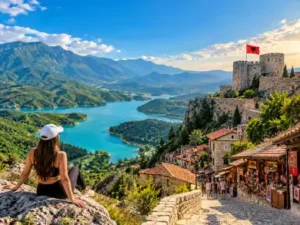
However, Berat does not need to stand alone. It can become the golden center of a larger seasonal journey created around three Albanian colors. Banja Lake contributes deep blue water and a quiet mountain setting. Berat adds white houses, golden stone and warm autumn light. Krujë completes the journey with the red-and-black symbols of Albanian identity.
Sunny Days Albania can help travelers experience these destinations through separate, carefully organized day tours from Tirana or Durrës. Rather than attempting to rush through Banja Lake, Berat and Krujë in one exhausting day, visitors can give each place enough time and allow the colors of the journey to develop naturally.
This is not an ordinary list of autumn attractions. It is a three-day travel story told through blue, gold and red.
Why Berat in Autumn Should Be the Center of the Journey
Berat works particularly well as the central destination because it brings together many of the qualities travelers look for during an autumn holiday.
The city offers history, traditional architecture, river views, local food and streets that reward slow exploration. Its famous hillside houses, rows of windows and castle create very different scenes as the daylight changes.
During summer, the walk toward Berat Castle can feel demanding under the midday sun. Exploring Berat in autumn usually offers a more comfortable rhythm. Travelers can spend more time observing the old neighborhoods, stopping for photographs and listening to their guide without constantly searching for shade.
The season also suits the personality of the city. Berat is not a destination that needs to be rushed. Its most memorable details are often small: an old doorway, a stone path, the alignment of windows across the hillside or a quiet view of the Osum River.
Sunny Days Albania introduces Berat as more than the “City of a Thousand Windows.” The nickname creates curiosity, but the complete experience comes from understanding how the castle, Mangalem, Gorica and the river relate to one another.
In the Three-Color Journey, Berat represents gold—not because every building is literally golden, but because the stone, rooftops and autumn sunlight create a warm historical atmosphere.
The Autumn Color Route Is Not a Race
Banja Lake, Berat and Krujë appear close enough on a map to tempt travelers into combining everything too quickly. However, forcing all three into one day would reduce each destination to a short photograph.
Banja Lake deserves time for the changing landscape and mountain journey. Berat needs time for the castle and traditional neighborhoods. Krujë becomes more meaningful when visitors can explore its bazaar and understand its connection with Skanderbeg.
The better approach is to use Sunny Days Albania tours to create a flexible two- or three-day plan. Travelers can return to the same accommodation in Tirana or Durrës after each experience rather than repeatedly moving their luggage.
This method also leaves space for weather changes. Autumn conditions are generally comfortable, but rain, clouds or mountain road conditions may occasionally affect an itinerary. Separate days provide more flexibility than trying to complete one overloaded route.
Think of the destinations as three chapters rather than three checkboxes.
Day One in Blue: Begin with a Banja Lake Tour
The blue chapter begins away from Albania’s busiest urban areas.
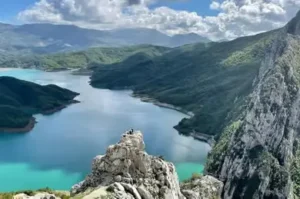
Banja Lake is surrounded by hills and mountain scenery near Gramsh. Its open water and quiet setting make it very different from Tirana, Durrës and the country’s historical towns.
A Banja Lake tour in autumn is not primarily about swimming. The season shifts attention toward landscape, photography, fresh air and the feeling of leaving the city behind.
The color of the lake changes with sunlight and weather. On a bright day, sections of the water can appear intensely blue. Beneath clouds, the lake may take on deeper shades that give the landscape a more dramatic character.
Sunny Days Albania offers a nature route connected with Banja Lake and Holta Canyon. In warmer months, swimming may be one of the main attractions. During fall in Albania, the same journey takes on a quieter personality.
Travelers can focus on the surrounding landscape, observe the seasonal colors and enjoy a destination that is no longer defined by summer heat. The exact access and activities should always depend on current weather, water and road conditions.
This makes blue the ideal first color of the journey. Banja Lake clears the mind before the itinerary moves toward the architecture and history of Berat.
Why Banja Lake Feels Different in Fall
Summer encourages people to move toward water. Autumn encourages them to stop beside it.
Without the pressure to swim at every opportunity, travelers can experience Banja Lake as part of a wider landscape. The surrounding hills, changing vegetation and reflections across the water become more important.
The drive is also part of the experience. As Sunny Days Albania leaves the larger urban areas behind, the road reveals smaller communities and countryside scenery. Visitors begin seeing the Albania that exists between its famous destinations.
A Banja Lake tour can therefore provide a useful introduction before visiting Berat. The lake presents the region through geography, while Berat later presents it through human history and architecture.
Blue is not only the color of water. In this journey, it represents space, calmness and the freedom to slow down.
Day Two in Gold: Explore Berat in Autumn
The second day moves from open nature into one of Albania’s most recognizable historical cities.
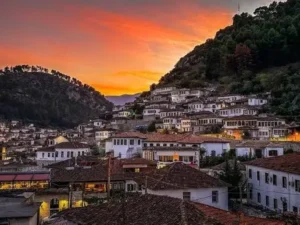
Arriving in Berat in autumn creates a different first impression from arriving during the busiest weeks of summer. The light is softer, walking conditions can be more comfortable and the city’s stone surfaces take on warmer tones.
The houses of Mangalem climb the hillside in carefully layered rows. Their white walls and repeated windows create the view responsible for Berat’s famous nickname. Across the Osum River, Gorica offers another perspective of the historic city.
The Gorica Bridge provides a physical and visual connection between the neighborhoods. Standing near the river allows visitors to understand the shape of Berat before entering its narrower streets.
Sunny Days Albania guides help travelers look beyond the postcard view. The city becomes more interesting when visitors understand why its neighborhoods developed as they did and how different religious and cultural communities contributed to its identity.
This is where the golden chapter begins—not with a single landmark, but with the warm combination of stone, history and autumn light.
Climb to Berat Castle Without Fighting the Summer Heat
Berat Castle sits above the city and remains one of the most important parts of a guided visit.
Unlike a fortress preserved only as an empty monument, Berat Castle has long contained homes, religious buildings, pathways and spaces connected with everyday community life. This gives the castle area a different atmosphere from sites designed solely for defense.
Exploring Berat in autumn can make the climb and walk through the castle more enjoyable. Visitors can pay closer attention to the old stones, changing views and historical structures rather than treating the route as a race toward the nearest shade.
From elevated areas, the surrounding hills and city become visible below. Autumn may add warmer colors to the vegetation, creating a seasonal frame around the rooftops and river.
A Sunny Days Albania guide can connect what travelers see with the historical development of Berat. Churches, mosques, defensive remains and residential areas become related elements within one living fortified city.
The experience is not simply about reaching the top. It is about understanding how a city continued existing within and around its castle walls.
Find the Golden Details of Berat
The most obvious autumn colors may appear in the landscape, but Berat’s golden character is also found in smaller details.
Sunlight catches rough stone walls. Wooden doors add darker tones to white façades. Traditional roofs create patterns above the narrow streets, while the Osum River reflects sections of the city.
Travelers interested in photography should avoid concentrating only on the widest panorama. The character of Berat in autumn can be found in corners, textures and changing light.
A quiet lane may create a stronger image than the busiest viewpoint. A row of windows can reveal more about the city than a rushed photograph of the entire hillside.
Sunny Days Albania gives visitors the historical context behind these details while leaving time to create personal memories. The guide provides the story, but every traveler notices something different.
This balance is important. Berat should be explained without being over-controlled.
Autumn in Berat Is Also a Season of Flavor
Seasonal travel is not only visual. It can also be tasted.
Autumn is associated with harvest traditions, local produce and more comforting meals. Around the Berat region, olives, grapes, vegetables and regional products contribute to the culinary experience.
Lunch during a Berat autumn tour becomes part of the journey rather than a break from it. Traditional dishes, local cheese, vegetables, pies or slow-prepared meals match the cooler atmosphere of the season.
Exact menus naturally depend on the restaurant and available ingredients. This variation should be welcomed. Seasonal food is meaningful because it does not remain identical throughout the year.
Sunny Days Albania can help visitors choose local options and understand what they are ordering. Even a simple meal becomes more memorable when it is connected with the region.
After walking through Berat Castle and the old neighborhoods, sitting down for Albanian food provides the right pause before returning to Tirana or Durrës.
Why Berat in Autumn Is More Than a Seasonal Photograph
It would be easy to create an article that describes autumn only through yellow leaves and pleasant temperatures. Berat deserves a deeper interpretation.
The quieter rhythm allows visitors to notice how people continue living within a place celebrated for its past. Children return from school, residents speak from doorways and local businesses operate between buildings photographed by travelers.
Visiting Berat in autumn means seeing the historical city outside the pressure of peak summer tourism. The destination still receives visitors, but the experience can feel less dominated by crowds and extreme heat.
This creates more opportunities for conversation. A guide can explain details without competing with large groups, and travelers can ask questions rather than constantly moving forward.
The season does not change Berat’s history. It changes the amount of attention visitors can give to it.
Day Three in Red: Continue to Krujë
After the blue of Banja Lake and the gold of Berat, the journey reaches its final color in Krujë.
Red appears throughout the town in Albanian flags, textiles and souvenirs. It is usually paired with the black double-headed eagle, the country’s most recognizable national symbol.
Krujë’s red is therefore not only a seasonal color. It represents identity, resistance and national memory.
A Kruje autumn tour introduces travelers to a destination that complements Berat without copying it. Both towns contain castles and traditional architecture, but their stories and atmospheres are different.
Berat reveals a layered city shaped by different communities and civilizations. Krujë is closely connected with Skanderbeg and the fifteenth-century resistance against the Ottoman Empire.
Sunny Days Albania helps travelers understand these differences. Visiting both places should not feel like repeating the same castle tour. Each destination answers another question about Albania.
Walk Through the Red-and-Black Bazaar
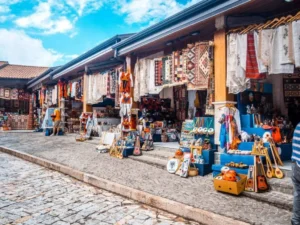
Krujë’s Old Bazaar provides one of the most colorful stages of the Autumn Color Route.
Red Albanian flags appear beside carpets, embroidered fabrics, traditional clothing, copper objects, wooden crafts and jewelry. The black double-headed eagle is reproduced across many of the items displayed along the cobblestone street.
Travelers should slow down and look beyond the most obvious souvenirs. Traditional patterns, materials and craft techniques can reveal stories that do not appear inside formal museums.
A Sunny Days Albania guide can help visitors understand the symbols and identify which questions to ask shopkeepers. Travelers seeking handmade products should ask where an item was produced and what technique was used.
During a Kruje autumn tour, the bazaar can also feel more comfortable than during the hottest part of summer. Cooler conditions make it easier to explore without rushing directly toward the castle.
The street is not merely a shopping stop. It is the red-and-black entrance to Albania’s national story.
Krujë Castle Completes the Three-Color Journey
Krujë Castle stands above the surrounding plains and provides the final major viewpoint of the itinerary.
Its location helps explain why the town became strategically important. From the elevated castle area, visitors can look across the landscape and understand the defensive advantage provided by the mountain setting.
The castle is closely associated with Gjergj Kastrioti Skanderbeg. His resistance against the Ottoman Empire made him one of the central figures of Albanian history and identity.
The Skanderbeg Museum and Ethnographic Museum may be visited during available free time, depending on the exact tour itinerary. Travelers should confirm whether entrance fees are included or paid separately.
Sunny Days Albania connects the historical stories with the visible landscape. The castle becomes more than an old structure, while the red Albanian flags become more than decorations.
After Banja Lake and Berat, Krujë completes the journey by turning color into national symbolism.
Three Colors, Three Different Albanias
The strength of this seasonal itinerary comes from contrast.
Banja Lake is spacious and quiet. Its blue belongs to nature.
Berat is warm and architectural. Its gold comes from stone, rooftops, food and autumn light.
Krujë is symbolic and historical. Its red is the red of the Albanian flag and the country’s national memory.
Trying to force these destinations into one day would weaken the contrast. Experiencing them over several days allows each color to develop its own meaning.
That is what makes this idea different from a generic guide to fall in Albania. The destinations are not included simply because they are attractive. They play separate roles within one visual and cultural story.
Sunny Days Albania provides the connection between them.
Who Is This Autumn Itinerary For?
The Three-Color Journey is suitable for travelers who want more than a beach-focused holiday. It combines nature, UNESCO heritage, castles, local food, mountain landscapes and traditional crafts.
Photographers can experiment with three distinct color palettes. Couples can enjoy a slower seasonal itinerary. Families can alternate outdoor scenery with historical exploration, while culturally curious travelers gain different perspectives on Albania.
The itinerary is also useful for visitors staying several days in Tirana or Durrës. They can explore different regions through organized day tours while returning to the same accommodation.
Visitors should be comfortable walking over cobblestones, slopes and potentially uneven terrain. Comfortable shoes and a light waterproof layer are useful during autumn.
Weather can change, particularly around natural and elevated destinations, so flexibility remains important.
Travel with Sunny Days Albania in Fall
Seasonal travel requires local awareness.
Road conditions, rainfall, daylight and attraction schedules may change. A swimming-focused summer plan may need to become a walking and sightseeing experience during cooler weather.
Sunny Days Albania can adapt the emphasis of the journey to the conditions. At Banja Lake, safety and road access come before completing every planned activity. In Berat and Krujë, guides can help visitors use their time efficiently while explaining the history behind what they see.
The company also organizes pickup from available locations in Tirana, Durrës or agreed meeting areas, depending on the selected tour. Visitors should confirm the exact pickup point when reserving.
This practical support allows travelers to enjoy Berat in autumn and the surrounding destinations without managing every route independently.
Book a Berat Autumn Tour with Sunny Days Albania
Autumn is not the season when Albania becomes less interesting. It is the season when a different Albania becomes visible.
The beaches grow quieter, historical streets become more comfortable and landscapes begin changing color. Travelers can replace the rush of peak summer with longer conversations, slower walks and more attention to local details.
With Sunny Days Albania, visitors can place Berat in autumn at the center of a wider seasonal adventure.
Begin with the blue water and open landscape of Banja Lake. Continue toward Berat, where golden stone, white houses and warm autumn light surround the Osum River. Complete the journey in Krujë, where red-and-black symbols lead from the Old Bazaar toward the castle of Albania’s national hero.
Explore the available Sunny Days Albania tours and ask the team about the most suitable autumn itinerary, current conditions and pickup options.
Do not travel through Albania this fall looking only for the brightest leaves.
Look for blue water, golden stone and the red flag above Krujë.
Together, they tell a much more interesting story.