Some destinations show you beautiful buildings. Others introduce you to the character of an entire country. Krujë belongs to the second group. Rising above the plains north of Albania’s capital, this historic mountain town carries stories of resistance, craftsmanship, tradition and national pride within its stone streets. A Kruje day trip from Tirana is not simply an escape from the city. It feels like opening the first chapter of Albania’s national story. In the space of a single day, travelers can walk through a centuries-old bazaar, enter a castle associated with Albania’s most celebrated hero and look across landscapes that once formed the setting for battles that shaped the country’s identity.
Krujë is close enough to Tirana for a comfortable excursion but different enough to feel like another world. The modern streets of the capital are replaced by cobblestones, wooden storefronts and castle walls. Instead of traffic and contemporary buildings, the day becomes filled with mountain views, historic objects and stories that have been passed between generations.
Leaving Modern Tirana Behind
The journey begins among the lively streets, cafés and colorful buildings of Tirana. As the city recedes, the surrounding landscape opens, and Mount Krujë becomes increasingly visible. The town sits against the mountain at an elevated position, overlooking the plains that extend toward the Adriatic coast.
This approach helps visitors understand why Krujë became such an important stronghold. Its location offered wide views of the surrounding territory and made the town naturally defensible. Long before travelers began arriving to explore its castle and bazaar, Krujë’s position gave it strategic importance.
A Kruje day trip from Tirana therefore begins telling its story before you reach the historic center. Looking up toward the town from the road, it is easy to imagine why controlling this mountain settlement mattered to the rulers and armies that passed through the region.
As the vehicle climbs toward Krujë, the atmosphere changes. The streets become narrower, the views expand and the entrance to the old town begins to reveal the destination visitors came to see.
Enter the Old Bazaar and Step Back in Time
The Old Bazaar acts as a natural gateway between present-day Krujë and its historic castle. Instead of entering the town through a formal gate, travelers pass between rows of small shops built in a traditional wooden style.
The cobblestone street rises gently toward the castle. Colorful carpets hang outside shops, silver jewelry glimmers in display cases, and shelves are filled with carved wooden objects, embroidered fabrics, traditional clothing and handmade souvenirs. Albanian flags and objects decorated with the double-headed eagle add strong flashes of red and black to the market.
The bazaar is one of the most enjoyable parts of a Kruje day trip from Tirana because it is more than a place to purchase souvenirs. It provides an introduction to Albanian symbols and craftsmanship. Many objects on display reflect traditions that existed long before mass-produced travel souvenirs appeared.
Walking through the bazaar should not be rushed. Its details are part of the experience: the texture of the old cobblestones, the wooden roofs leaning toward the street and conversations taking place between local shopkeepers. Even travelers who do not plan to buy anything can enjoy observing the materials, patterns and techniques represented in the stores.
Shopping here also provides an opportunity to bring home something connected with the destination. A small handmade textile, piece of local craftwork or traditional decorative item carries a stronger connection to Krujë than an ordinary souvenir found anywhere else.
Follow the Road Toward Krujë Castle
At the end of the bazaar, the castle rises as the central symbol of the town. Krujë Castle is closely connected with Gjergj Kastrioti Skanderbeg, Albania’s national hero, who led resistance against the Ottoman Empire during the fifteenth century.
The castle was not designed as a decorative royal residence. It functioned as a defensive stronghold, and its position reveals how geography became part of its protection. From the castle area, visitors can look across the plains below and understand the strategic advantage offered by the mountain.
Parts of the historic walls and structures remain integrated into the site today. Walking around the grounds creates a different experience from visiting a completely reconstructed monument. The uneven paths, surviving stones and changing views invite visitors to imagine how the fortress may have appeared during its most important historical period.
A Kruje day trip from Tirana becomes especially meaningful here because Skanderbeg is not a distant or minor figure in Albanian culture. His name appears across the country, including in Tirana’s main square. His image can be found on monuments, flags, souvenirs and public buildings. Visiting Krujë connects these modern symbols with the place most strongly associated with his resistance.
Meet Skanderbeg Beyond the Monument
For many international travelers, Skanderbeg is a new historical figure. In Albania, however, he represents courage, resistance and the defense of the country. Born Gjergj Kastrioti, he became known as Skanderbeg and organized a long resistance against Ottoman forces during the fifteenth century.
His importance cannot be understood only by looking at dates or military events. Skanderbeg became a symbol of unity during a period when local territories were divided among powerful families and surrounded by much larger political forces. His story later became central to the development of Albanian national identity.
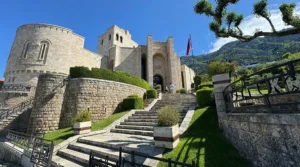
The Gjergj Kastrioti Skanderbeg National Museum stands within the castle complex. Its imposing architecture makes it one of the most recognizable buildings in Krujë. Inside, exhibits present Skanderbeg’s life, the historical environment in which he lived and the resistance connected with the castle.
A visit to the museum transforms the castle from an attractive viewpoint into a place with human stories. Weapons, artwork, documents, reproductions and historical displays help visitors imagine the political and military world of the period.
This is also where the article’s journey returns briefly to Tirana. Travelers who saw Skanderbeg’s equestrian statue in the capital can now understand why the country’s central square carries his name. A Kruje day trip from Tirana connects the national symbols found in the capital with the landscape where an important part of that story unfolded.
Discover Life Away from the Battlefield
Krujë’s history is not limited to sieges, armies and national heroes. Close to the Skanderbeg Museum, the Ethnographic Museum presents a quieter and more personal side of the town’s past.
Housed in a traditional residence, the museum offers insight into domestic life, family organization, clothing, food preparation and local craftsmanship. Its rooms demonstrate how people lived and worked before modern technology transformed everyday routines.
This creates an interesting contrast within the castle grounds. The Skanderbeg Museum tells a story of political resistance and national importance, while the Ethnographic Museum brings history down to the scale of the home. Together, they reveal that Krujë was not merely a fortress. It was also a community where generations of families maintained their customs and skills.
Visitors interested in architecture can pay attention to how the house was arranged and how different spaces served specific purposes. Travelers interested in culture may be drawn to traditional fabrics, household objects and craft tools. Each detail adds another layer to the experience of visiting Krujë.
Find the Best View of the Day
After exploring museums and stone paths, the castle’s open viewpoints provide a moment to pause. From this elevation, the landscape stretches far beyond the town. On a clear day, visitors can see across the plains toward distant settlements and the western horizon.
The view is beautiful, but it also completes the historical picture. Standing above the landscape makes the defensive value of Krujë immediately understandable. Approaching forces could be observed from a considerable distance, while the mountain protected the fortress from behind.
This is one of the moments when a guided tour can make a visible landscape more meaningful. What initially appears to be a pleasant panorama becomes part of the town’s historical explanation.
The elevated setting also makes Krujë an attractive destination for photography. Castle walls, traditional rooftops, mountain slopes and the wide landscape below provide very different compositions within a compact area.
Taste a Different Side of Krujë
After walking through the bazaar and castle, lunch offers another way to connect with the destination. Traditional Albanian restaurants around Krujë serve dishes influenced by the ingredients and cooking practices of central and northern Albania.
A meal may include locally prepared meat, seasonal vegetables, cheese, fresh bread and traditional pies. The exact dishes available can change depending on the restaurant and season, which makes asking for local recommendations worthwhile.
Eating in Krujë is not simply a break between attractions. Food provides another view of the hospitality for which Albania is known. A relaxed meal also creates time to absorb the stories and sights experienced earlier in the day.
Travelers interested in local flavors may also encounter mountain tea, homemade preserves or regional products sold around the historic area. These simple tastes complement the craft traditions visible in the bazaar and make the experience more sensory.
Is Krujë Worth Visiting from Tirana?
Krujë is particularly suitable for visitors who want to understand Albania rather than only photograph it. Its importance comes from the connection between place, history and national memory. The castle has meaning because of the events associated with it, while the bazaar remains attractive because it preserves a visible relationship with traditional crafts.
The relatively short distance from the capital makes a Kruje day trip from Tirana easy to include in a wider Albanian itinerary. It is suitable for travelers spending only a few days in Tirana as well as those beginning a longer route through the country.
Krujë also offers variety without requiring long journeys between attractions. History, shopping, museums, architecture, local food and mountain scenery can all form part of the same visit. This makes the destination interesting for couples, families, solo travelers and small groups with different travel preferences.
When Should You Visit Krujë?
Krujë changes character with the seasons. Spring brings greener mountain landscapes and comfortable conditions for walking through the castle. Summer provides long, bright days, although the historic streets can become busier and warmer around midday.
Autumn gives the surrounding landscape warmer colors and often creates pleasant temperatures for exploring on foot. Winter offers a quieter atmosphere, but visitors should prepare for colder mountain weather and check conditions before traveling.
The castle and bazaar include cobblestone surfaces and uneven paths, so comfortable footwear is useful throughout the year. A light jacket can also be helpful because Krujë’s elevated position may feel cooler than central Tirana, particularly outside summer.
Return to Tirana with a New Understanding of Albania
At the end of the day, the road returns from Krujë’s mountain setting to the modern capital. Tirana’s traffic, cafés and colorful architecture come back into view, but some familiar symbols may now carry a different meaning.
Skanderbeg Square is no longer only the center of Tirana. The warrior on horseback is no longer simply a monument. After walking through Krujë Castle and learning why the town became a center of resistance, visitors return with a clearer understanding of how Albania presents its national story.
That transformation is what makes a Kruje day trip from Tirana memorable. The trip covers a relatively short geographical distance, yet it travels across centuries of history. It begins in a modern European capital, passes through a traditional bazaar and reaches a fortress associated with the country’s most celebrated historical figure.
With Albania Day Tours, visitors can discover the town’s principal sites while also understanding the stories connecting them. Rather than seeing Krujë as a collection of separate attractions, travelers experience it as a living chapter of Albania’s identity.
The castle, museum, mountain and Old Bazaar each tell a different part of the story. Together, they make Krujë one of the most meaningful destinations that can be explored from Tirana in a single day.